
Building an AR policy that works with Chasa
What a practical accounts receivable policy should cover — terms, credit limits, chase stages, disputes, and write-offs — and how each piece maps to Chasa’s aging board, AI drafts, and templates.
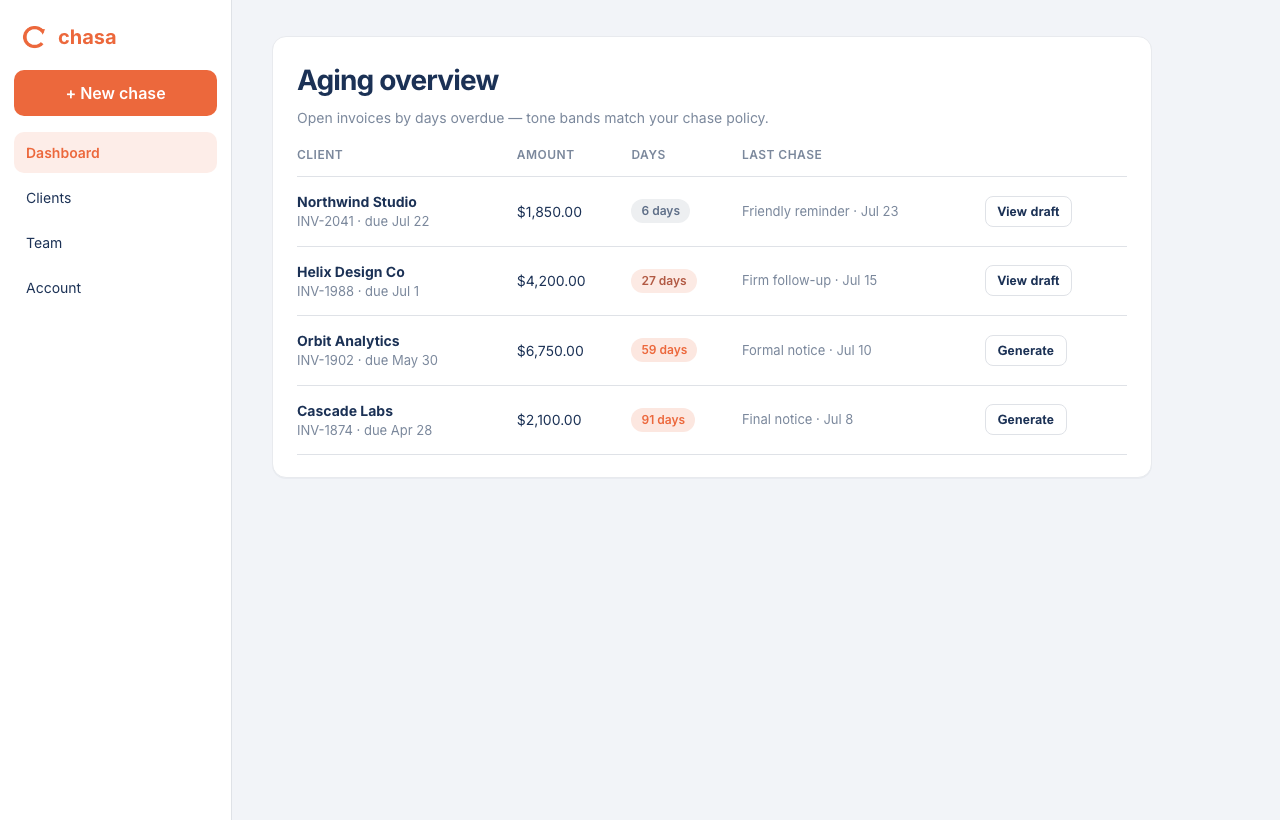
You have invoices in the aging board, tone-matched drafts ready to copy, and a chase plan mapped to how late each balance is. The tooling is humming. So why does getting paid still feel reactive?
Usually it is not the product. It is the accounts receivable policy underneath it. Chasa drafts the follow-up you send from your own inbox — but who gets credit, on what terms, when tone should escalate, and what happens when reminders fail still has to live in a short written policy your team (or you, solo) can follow.
This guide covers what a practical AR policy needs, where freelancers and small teams leave gaps, and how each piece maps to Chasa — aging, AI drafts, chase plans, and free templates.
The gap between drafts and policy
Tools like Chasa replace the blank page. They suggest the right tone at 1 week, 30 days, or 60+ days overdue, keep a payment link handy, and help you track which invoices you already chased. Every day past due is cash you cannot use — which is why slow receivables quietly squeeze freelancers and growing SMBs alike.
What a draft tool cannot decide for you:
- Whether a client should have been on open account at all
- What to do when someone goes silent after your third follow-up
- Whether a dispute should pause chasing or continue while you investigate
Those decisions belong in a policy — even a one-page one. Without it, you improvise under stress, outcomes get inconsistent, and write-offs are hard to defend later.
Payment terms and invoice standards
Start with your standard terms. For most freelancers and small agencies that is Net 14 or Net 30 from invoice date. Write it explicitly, say what triggers an exception (rush work, retainers, new clients), and who can approve non-standard terms in writing.
Then define what a valid invoice must include: due date, billing contact, amount, line clarity, and how to pay. A missing due date or wrong AP contact creates delays no reminder sequence can fix. Chasa’s tone bands use days overdue from the due date you entered — if that date is wrong, every draft fires at the wrong stage.
Put the same terms in contracts, SOWs, and invoice footers so follow-ups cite an agreement, not a surprise.
Credit limits: two tiers most solo operators skip
Open-account work means you deliver before you are paid. Your policy should say how that credit is granted and reviewed — otherwise “gut feel” becomes the system.
Tier 1: Soft threshold
Below a written aggregate balance (for example open AR under $2,000–$5,000 depending on your average invoice), you can skip formal review if the client has a verified billing contact, no prior bad debt with you, and terms no longer than Net 30. That keeps small jobs moving.
Tier 2: Formal check
Above that threshold — or for first projects above a set amount — require a short credit application or deposit (30–50% upfront is common for freelancers), review payment history, and record the approved limit. Revisit annually, or sooner if payment behavior changes or a new order would push them well over the limit.
Chasa is not a credit bureau. It is where you see aging and draft the chase once credit was already extended. The policy decides the extension; the tool executes the follow-up.
Collections workflow: stages, tone, and ownership
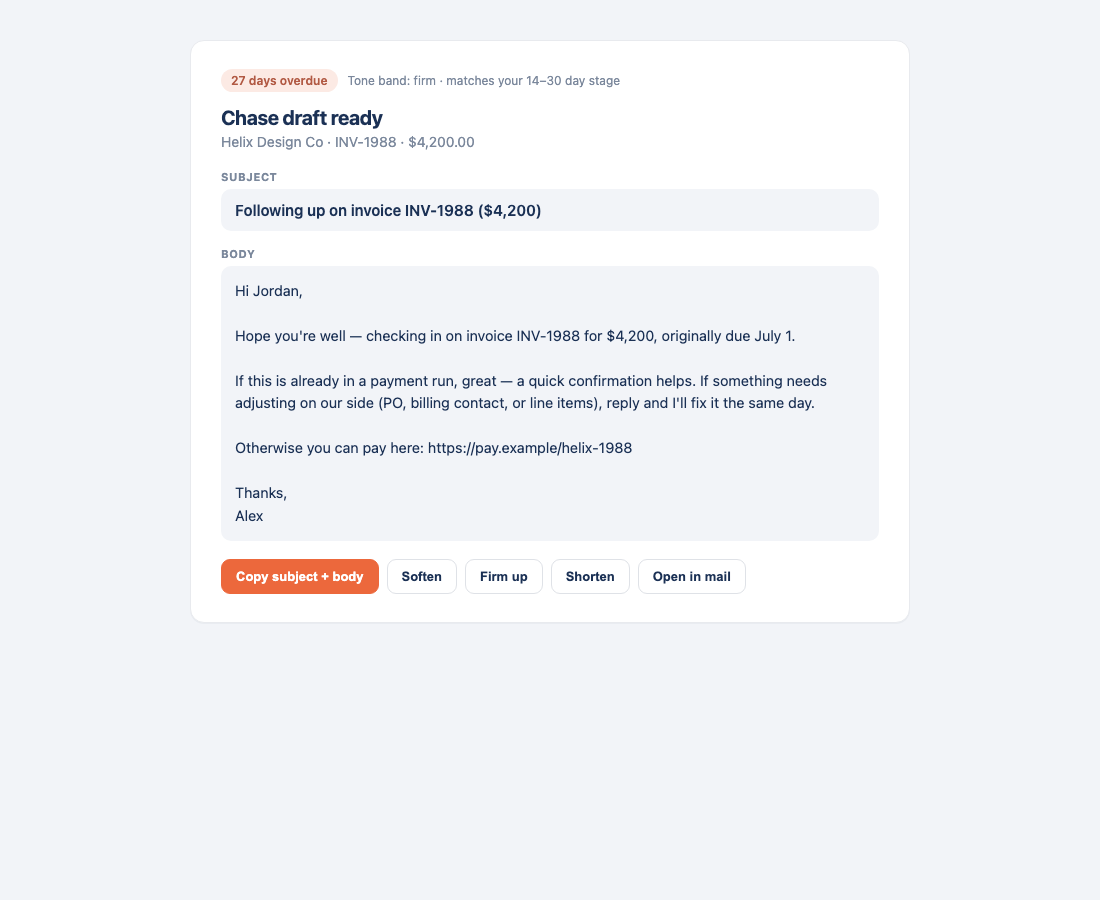
Chasa’s value is the right draft at the right age — but the schedule should reflect deliberate choices, not only defaults.
Segment lightly
Not every client needs the same cadence. High-volume accounts may prefer a monthly summary. New clients may need a gentler first touch. Clients who always pay on day 45 may need an earlier heads-up, not a colder tone. Note those groups in the policy and adjust when you generate drafts.
A practical stage table
A clear workflow names the trigger, the action, and who owns it. Solo operators own every row; small teams should still write names so stage five does not fall between stools.
| Stage | Trigger | Action | Owner |
|---|---|---|---|
| 1 | 7 days before due | Friendly heads-up (confirm receipt + due date) | You · Chasa draft |
| 2 | Due date / +1 day | Courtesy reminder | You · Chasa draft |
| 3 | ~7–14 days overdue | Firm follow-up; ask for a payment date | You · Chasa draft |
| 4 | ~30 days overdue | Formal notice; cite terms / late fee if in policy | You · Chasa draft |
| 5 | ~45 days overdue | Call or video; record promised pay date | You / AR lead |
| 6 | ~60 days overdue | Senior escalation email | Founder / finance lead |
| 7 | ~90 days overdue | Final notice before collections or legal | Founder |
| 8 | 120+ days / no response | Write-off review or licensed collection referral | Founder / management |
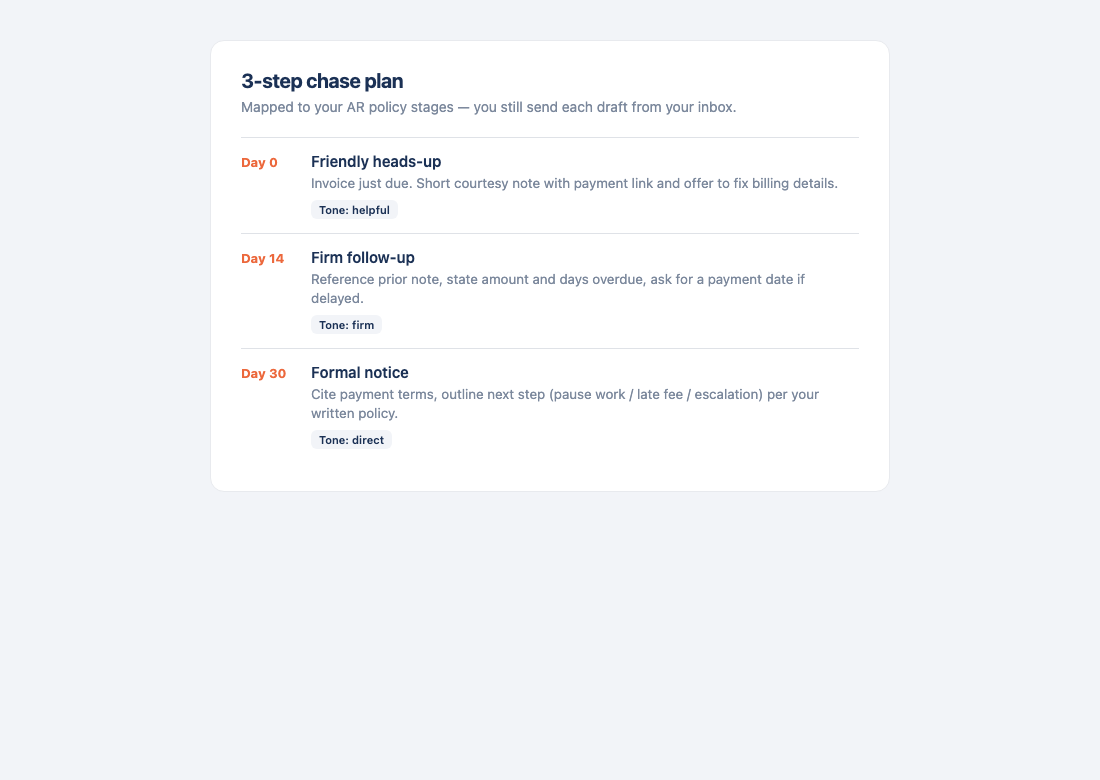
Chasa’s aging board and 3-step chase plans help you execute stages 1–4 consistently. Phone outreach and write-off approval stay human — and should be named in the policy so they actually happen.
Disputed invoices: pause, document, resolve
Disputes are the most common reason to stop escalating. Your policy should say when chasing pauses and who can pause it.
A workable rule set:
- Log the dispute the same day with a short reason
- Set a resolution target (often 10–30 days)
- Notify whoever owns delivery or billing
- Escalate if unresolved past the window
Use Chasa’s dispute-oriented template language when you reply, then resume aging-based drafts only after the issue is closed or credited. Sending firmer tones into an open dispute burns trust and clutters your record.
Write-offs and bad debt thresholds
No AR policy is finished without write-offs. A balance becomes a bad-debt candidate when collection is exhausted — silence, insolvency, business closure, or advice that recovery is not worth the cost.
Define:
- When a receivable qualifies for write-off review
- What documentation you keep (chase history, notes, any third-party report)
- Who approves by amount (e.g. under $500 you alone; above that, co-founder or accountant)
Keep records for the retention period your accountant recommends (often several years for tax). Consistent notes on each chase in Chasa make that trail easier to reconstruct later.
AR policy checklist before you rely on Chasa
Before you treat drafts as “the process,” confirm each of these is written down — even briefly:
- Payment terms — standard terms, exceptions, who approves
- Invoice standards — required fields, delivery, bounce escalation
- Credit limits — soft threshold, formal review trigger, deposits
- Segmentation — who gets adjusted timing or multi-invoice summaries
- Collection stages — trigger days, tone, named owner
- Disputes — pause authority, timeline, escalation
- Write-offs — thresholds, docs, approvals
If any of these seven still run on convention only, that is where cash flow and client relationships are most exposed.
Chasa works best when the policy is already there
Invoice follow-up software cuts blank-page time and keeps tone consistent with how late a balance is. The decisions above the draft — who gets credit, at what limit, on what terms, and what happens when reminders stop working — still need a written framework.
A good AR policy does not make you rigid. It gives you a reliable process, a clear next step when things get awkward, and a documented basis for every call on a client’s credit. Chasa is most effective when it executes a policy you have already agreed with yourself (or your team).
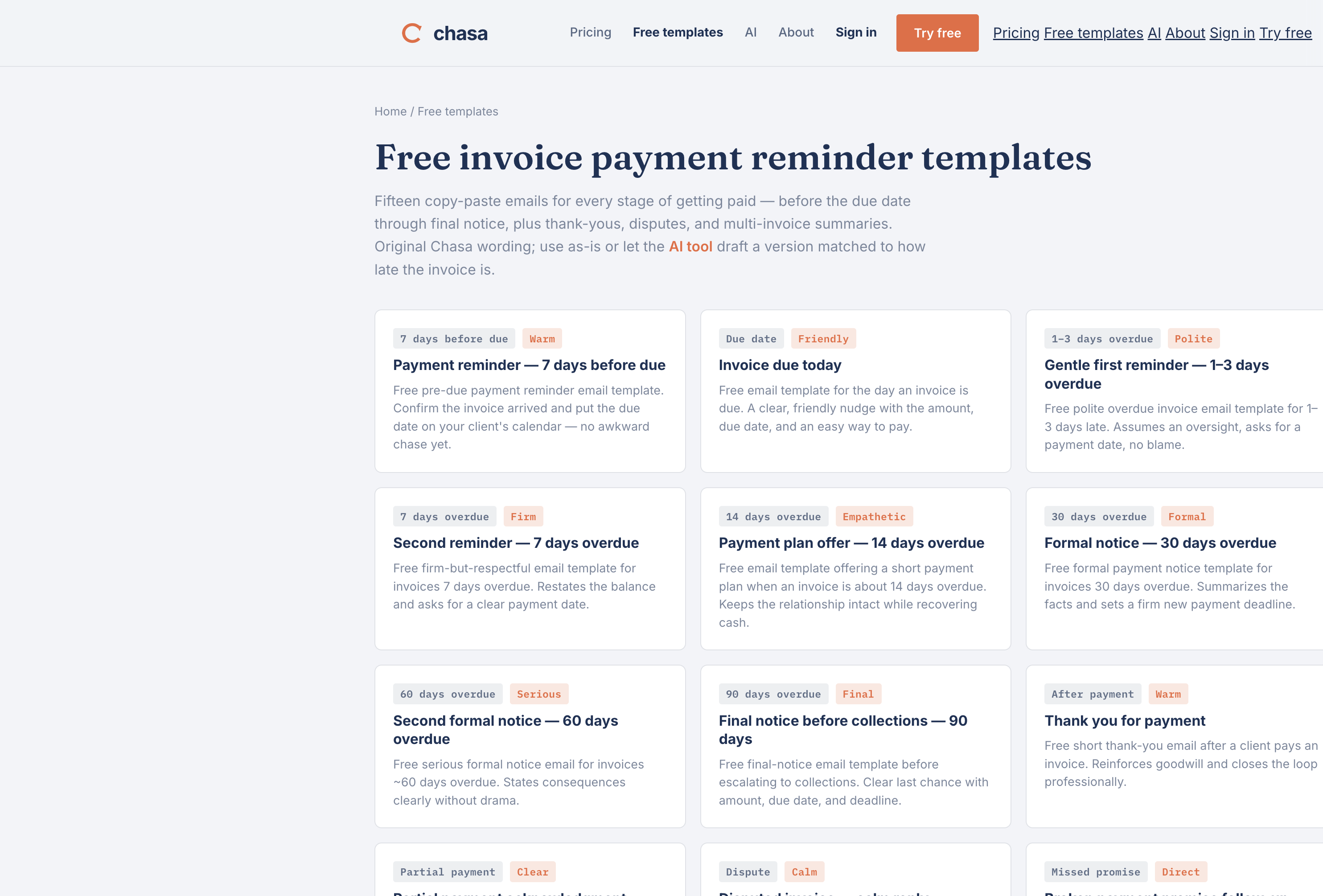
Start with the free reminder templates, map them to the stage table above, then use the AI tool to draft tone-matched emails you send yourself. Pair that with a one-page policy and you close the gap between automation and getting paid.
FAQs
What should an accounts receivable policy include?
At minimum: standard payment terms and exception approval, invoice validation rules, a simple credit-limit approach (soft threshold plus formal review or deposit), client segmentation notes, a staged collections workflow with owners, a dispute pause procedure, and write-off approval thresholds with retention of supporting notes.
What is a soft (blind) credit threshold?
It is the maximum open balance you allow without a formal credit review, as long as the client is verified, has no bad-debt history with you, and stays on short terms (typically Net 30 or less). Above that line, require a deposit, application, or explicit approval before you extend more credit.
When should I pause chasing for a dispute?
As soon as the client raises a legitimate issue (pricing, delivery, scope). Log it the same day, set a resolution window, and stop escalating tone until it is fixed or credited. Resume aging-based drafts only after the dispute is closed.
Who should approve a write-off?
Use amount tiers. Small balances can be your call; larger ones should need a second person (co-founder, finance lead, or accountant). Keep chase history and a short memo on why recovery stopped — especially if you claim a tax deduction later.
Try Chasa free · Freelancer late payment policy · How to follow up on overdue invoices